Paying rent and attending classes at the same time is a financial problem a lot of students are still trying to solve. Flexible McDonald’s jobs are one real answer to that.
McDonald’s hires on official contracts, which means social security registration from day one. That detail rarely shows up in job search advice, but for a first-time worker, it matters.



Scheduling flexibility is real, though franchise-to-franchise differences mean your experience might not match what you read online. Some restaurants are much more accommodating than others.
This piece covers the positions available, honest pay figures, how to find openings, and one legal point that matters more than the shift calendar for a student signing their first work contract.
Why Students Keep Coming Back to McDonald’s for Part-Time Work
The fast-food chain is not a glamorous career destination, but it fills a real gap for students.
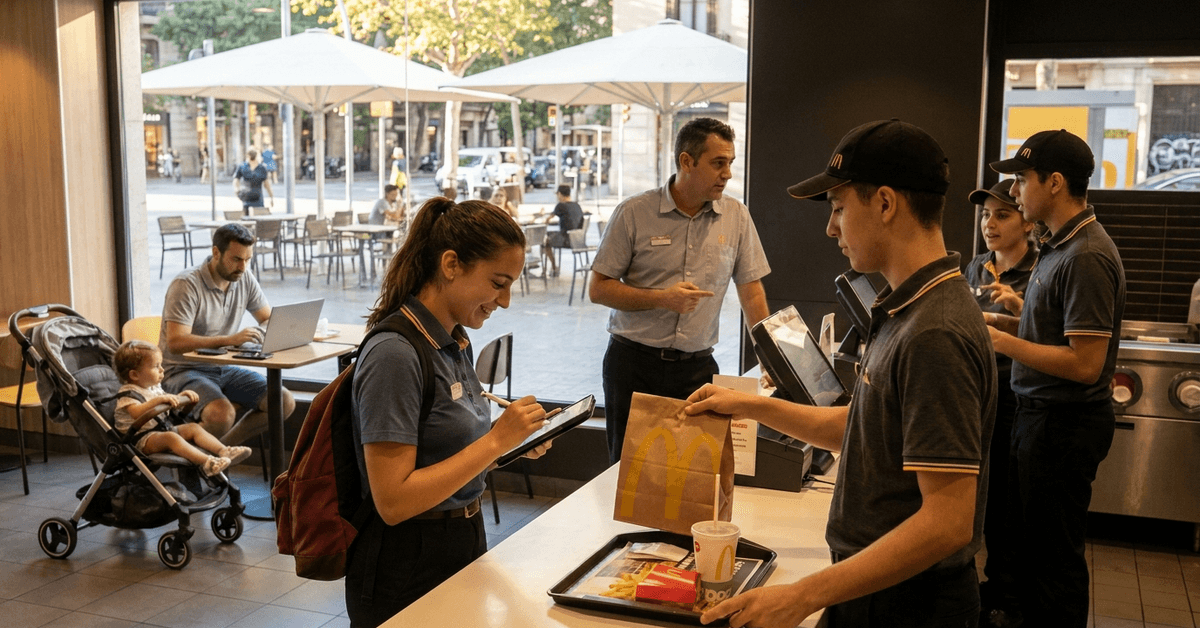
Shift-based scheduling means you can tell the restaurant you are available only Tuesday afternoons and Saturday mornings, and there is often a real chance they will work around that.
I disagree with the standard advice that says flexible scheduling is the main reason to pick McDonald’s for your first job.
The stronger case is the official employment contract, which covers social security registration for a student earning 7 to 10 euros an hour while also building a cotización record that affects future unemployment claims.
No other common part-time option for students offers that combination at entry level.
McDonald’s also has room to grow for workers who want it.
Crew members sometimes move to team leader or shift manager, and some reach head office roles in HR or marketing. That path is not guaranteed, but it does exist for people who stay long enough to pursue it.
How Crew Shifts Actually Fit Around a Class Schedule
Crew member shifts at McDonald’s run in recognizable blocks: early morning, split, evening, and late night.
A student with morning classes can realistically request afternoon or evening coverage, and scheduling managers at most locations factor in stated availability preferences when building the weekly rota.
Shift swapping also happens in practice. Workers negotiate with colleagues when something unexpected comes up. This is informal at many locations, but restaurants generally look the other way when swaps make the schedule function.
Why the Delivery Rider Option Deserves a Second Look
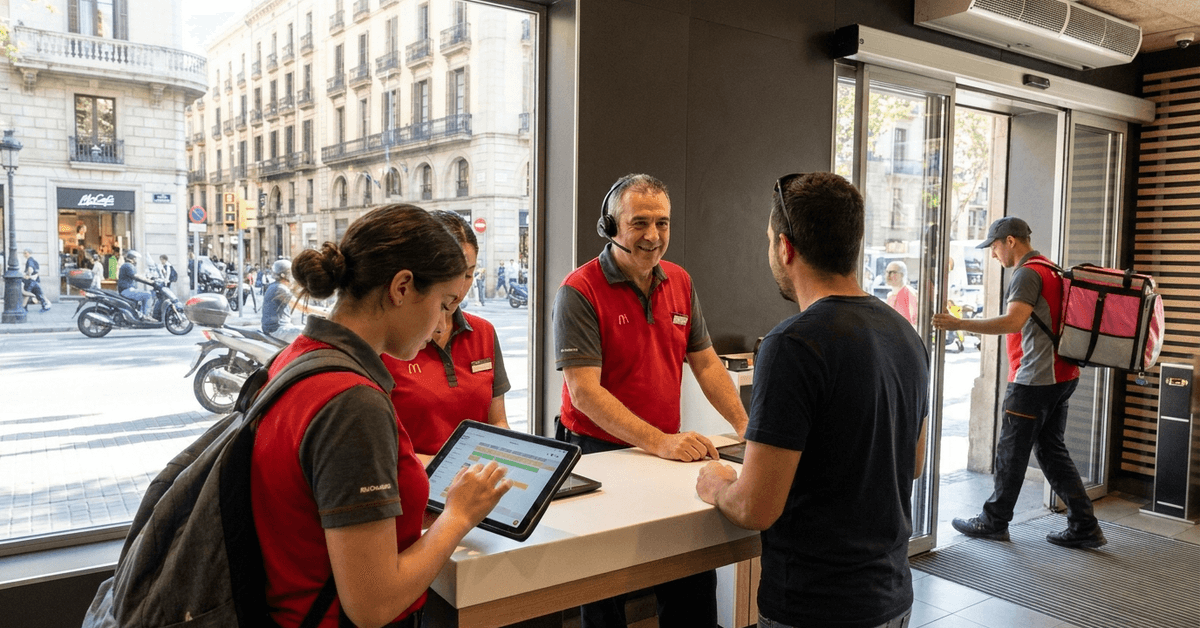
McDonald’s has been expanding its delivery operations, and the rider positions that come with those deliveries are worth a closer look.
These roles tend to lean toward off-peak hours, including late evenings and weekends, which is exactly when students tend to be free.
Some rider positions require your own scooter or car. Not all of them do. Check the specific job posting for transport requirements before applying, because this varies significantly by location and franchise.
Rider pay sits slightly above standard crew pay. The typical range runs from 7 to 11 euros per hour plus tips, compared to 7 to 10 euros for in-restaurant crew. The difference may not sound dramatic, but tips add up on busy delivery nights.
Pay and Hours at McDonald’s: Honest Figures
Pay at entry level follows Spanish minimum wage law, with some variation depending on the region, the franchise owner, and the role.
Evening and holiday shifts can attract additional compensation depending on the collective bargaining agreement at that franchise.
Position-by-Position Pay Breakdown
| Position | Weekly Hours | Typical Pay (€/hr) |
|---|---|---|
| Crew Member | 10–30 | 7–10 |
| Delivery Rider | 8–20 | 7–11 + tips |
| Shift Supervisor | 20–40 | 9–13 |
The table gives realistic ranges, not guarantees. Busier seasons may bring extra shifts; quieter periods can cut hours below your preferred number.
Shift supervisors earn the most in this tier, but moving from crew to supervisor takes time and consistent performance.
Some workers reach that level in under a year. Others stay at crew level by choice for years, which is a perfectly reasonable outcome if part-time income is the goal.
Getting a McDonald’s Job Without Overthinking the Process
The McDonald’s careers page is the most direct starting point. The application form is simple, and you do not need formal qualifications or an elaborate CV to submit one.
A few other channels worth checking:
- InfoJobs and Indeed both post McDonald’s openings regularly, sometimes faster than the official site updates
- Walk-in visits work at some franchise locations, particularly when a restaurant has recently opened nearby
- In-store job posting boards still appear at a number of locations
Where to Find Open Positions
The practical flow is: check the official site first, then cross-reference with InfoJobs for any openings the official site has not yet published. Applying through both does not waste effort, since the applications go to separate pipelines.
Some franchise locations hold scheduled open interview sessions on specific days. Calling ahead to ask about these is a reasonable move. Workers who have done it report it saves a lot of waiting around.
What to Expect in the McDonald’s Interview
The interview is short and direct. Expect questions about your available hours, your experience with customers or teams, and how you would handle a sudden rush during service.
The interviewer is checking whether you can work with other people and show up reliably.
Common interview questions to prepare for:
- “Can you work weekends or evenings?”
- “How would you stay calm during a rush of orders?”
- “Have you worked in a team before?”
The answers do not need to be polished. McDonald’s crew interviews are not technical screenings. They are looking for someone who is honest about availability and will not disappear after the first difficult Saturday shift.
Legal Basics for First-Time Workers at McDonald’s
The governments has clear labor protections for part-time workers, and McDonald’s positions fall under official employment contracts. That is not a given across all service industry work, especially in gig-adjacent roles.
Why Your Social Security Registration Matters from Day One
All McDonald’s employees are registered for social security from the start of their contract. Part-time workers are included without exception.
This registration covers healthcare access and begins building your cotización record, which the country uses to calculate future unemployment benefits and eventual pension entitlements.
A delivery app that classifies its workers as self-employed skips this registration entirely, which means no cotización record accumulates. McDonald’s is legally required to register all employees from day one of their contract.
Legal points to keep on hand:
- Minimum legal working age is 16, with parental consent required for anyone under 18
- Part-time employees earn proportional paid holidays based on hours worked
- All workers receive official payslips and an annual income certificate for tax reporting
For anyone uncertain about their contract or tax situation, visiting the SEPE or a local gestoría is a practical first step. This is especially true for international students new to the Spanish employment system.
Questions People Ask About Flexible McDonald’s Jobs
Q: Can I start part-time and move to full-time hours later? Crew positions start part-time, and moving to a higher-hours contract is possible as you take on more responsibility. The timeline depends on the franchise and whether supervisor-level openings exist. Some workers move up within a year; others stay part-time by choice for much longer.
Q: Does McDonald’s pay extra for holiday shifts? Extra pay for Spanish public holidays depends on the collective bargaining agreement at your specific franchise. Ask about this before signing your contract. It is a legitimate question and the hiring manager will have the answer.
Q: What documents do I need before I can start? A DNI (for Spanish nationals) or NIE (for foreign residents) is required for an official employment contract. A social security number is also needed. If you do not have one yet, a gestoría can help you get it sorted before your start date.
Q: Is there a trial period, and what does it mean for you? Spanish labor law allows a trial period of up to two months for most standard roles. During that period, either the worker or the employer can end the contract without standard notice requirements. This applies in both directions, so read your contract before signing.
Conclusion
A flexible McDonald’s job in gives students something more durable than a convenient schedule. The official contract and social security registration set these roles apart from most gig work available to students.
Crew members and delivery riders both operate inside a real employment framework, not a gray zone. Plenty of part-time jobs promise flexibility, but few put your name on an official contract from day one.