So you’re thinking about picking up a delivery gig. Maybe the idea of setting your own hours sounds appealing, or you need fast cash while you figure out your next move.
The pitch is simple: sign up, deliver food or parcels, get paid weekly. Platforms like Glovo and Amazon Flex make it sound easy. And to be fair, parts of it are.



What nobody spells out are the numbers after costs. Fuel, autónomo registration, insurance, and maintenance can quietly shrink a €4–€6 per order rate into something much less exciting.
This article is for anyone who wants to go into delivery driving with their eyes open, not stars in them.
Why Delivery Work Still Makes Sense in 2026
The short answer: demand is real and consistent. Online shopping and food delivery orders in Spanish cities didn’t flatten after the pandemic boom.

Order volumes across platforms like Glovo have stayed high in Madrid, Barcelona, and Valencia, and the pool of drivers hasn’t grown fast enough to make the work scarce.
For someone who needs income on a schedule they control, delivery driving has a structural advantage over most part-time work. A restaurant kitchen job locks you into fixed shifts. A delivery app doesn’t care if you start at 7pm or 11pm.
Food, Parcels, and Groceries: Which Type Suits You?
Three main delivery types exist in the Spanish market, and each attracts different drivers for different reasons.
A bicycle driver in central Barcelona doing food orders during dinner rush will have a very different weekly income than someone doing parcel blocks on the outskirts of Seville.
The main categories break down like this:
- Food delivery (Glovo, Uber Eats, Just Eat): Orders come fast during lunch and dinner windows. Tips are possible, especially on larger orders in wealthier neighbourhoods. Work is sparse outside peak hours.
- Grocery delivery (supermarket chains, specialty shops): Order volume is lower but baskets are heavier, which matters if you’re on a bicycle or scooter. Pay per drop-off can be slightly higher.
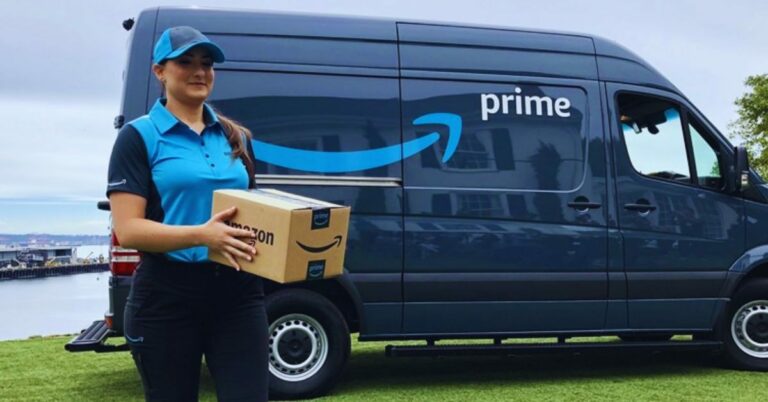
- Parcel delivery (Amazon Flex): Requires a car or van. Drivers book time slots in advance, which gives more schedule control than food apps.
The delivery type you choose matters as much as which platform you join.
Glovo, Uber Eats, Just Eat, and Amazon Flex Compared
No single platform dominates cleanly. Each has strengths that depend heavily on your city and vehicle type.
| Platform | Vehicle Required | Payout Schedule | Best For |
|---|---|---|---|
| Glovo | Bicycle, scooter, or car | Weekly | High order volume, delivery variety |
| Uber Eats | Bicycle, scooter, or car | Weekly | Urban food delivery, surge pricing |
| Just Eat | Bicycle or scooter | Weekly | Steady, predictable orders |
| Amazon Flex | Car or van | Per block completed | Parcel delivery, schedule control |
If you have a car and want predictability, Amazon Flex is worth considering. If you’re on a scooter and want volume, Glovo or Uber Eats in a major city tends to generate more orders per hour.
Amazon Flex Works Differently From the Rest
Amazon Flex deserves its own explanation. Drivers book time slots, called blocks, through the app. A block guarantees a set pay amount for that window, so you know what you’ll earn before leaving home.
The catch: available blocks in popular metro areas fill fast. Drivers who want peak-hour slots need to check the app regularly or risk missing them. Flexibility exists, but it requires planning in a way that food delivery apps don’t demand.
How Much Can a Delivery Driver Realistically Earn?
The platform numbers look clean on paper. Base pay runs around €4 to €6 per order, and most platforms pay weekly. Add surge pricing on busy nights, occasional bonuses for hitting delivery targets, and tips from satisfied customers.
I think the €4 to €6 base rate sounds reasonable until you run the hourly math. During peak dinner hours in a dense city, completing four to five orders per hour is achievable.
During slow afternoons, that drops to two or fewer. A six-hour shift mixing both could land you anywhere from €40 to €70 before costs.
That “before costs” qualifier is where a lot of new drivers get surprised.
The Costs That Rarely Appear in the Income Estimates
The income side of delivery driving gets plenty of attention. The cost side rarely does. Recurring expenses worth tracking honestly include:
- Fuel or charging costs: Petrol prices have run above €1.70 per litre in recent years. Scooter drivers covering 80–100 kilometres per shift feel this directly.
- Vehicle maintenance: Tyres, brakes, and servicing wear faster on delivery schedules than on personal use. Budget for this monthly.
- Insurance: Platforms often require third-party liability coverage for motor vehicles. An entry-level policy for a scooter can add €30–€60 per month.
- Autónomo contributions: Social security contributions for new self-employed registrants start at around €230 per month in 2026, rising with income after the initial flat-rate period.
That autónomo cost is the biggest surprise for new drivers. €230 per month is roughly €2,760 per year before you’ve earned a single euro. If your delivery income doesn’t clear that threshold, you’re paying to work.
Getting Started: What You Need Before Your First Order
The registration process on most platforms takes between a few days and two weeks, depending on documentation volume and verification requirements. The typical requirements across Glovo, Uber Eats, Just Eat, and Amazon Flex are:
- Valid Spanish ID or residency permit
- A compatible vehicle (each platform’s app specifies accepted types)
- A smartphone with a working data connection
- Proof of insurance for scooters, motorcycles, and cars
- A basic background check (required by some platforms, not all)
One thing worth knowing upfront: signing up for multiple platforms simultaneously to “keep options open” is popular advice in delivery driver forums. My take runs counter to what you’ll read almost everywhere else.
Autónomo Registration and What It Actually Involves
Registering as autónomo is not optional for most delivery drivers.
The Ministerio de Trabajo y Economía Social has clarified that riders operating independently on platforms are treated as self-employed for tax and social security purposes.
Registration comes with real paperwork obligations: quarterly income declarations, managing VAT if applicable, and tracking all platform earnings as professional income. Getting this wrong in year one costs more to fix than getting it right from the start.

Why Starting on Multiple Platforms at Once Is a Mistake
I disagree with the standard advice to activate every platform simultaneously when starting out. The reasoning sounds logical: more apps mean more orders, more options, more money.
The problem is that each platform has its own zone patterns, acceptance rate thresholds, and bonus structures.
A new driver splitting attention between Glovo and Uber Eats simultaneously burns time switching apps, misses time-sensitive offers, and takes longer to understand either platform’s peak rhythms.
I’d wait at least four to six weeks on one platform before activating a second. That’s the point where you start knowing which city zones produce back-to-back orders and when surge pricing actually arrives.
Operational zone knowledge multiplies earnings much faster than raw app-switching.
Peak Hours and Zone Selection Change Everything
On the earnings side, timing and location matter more than raw hours worked.
Drivers who work dinner rush hours (roughly 8pm to 11pm) and weekend lunches consistently report higher order density and better tip rates than those working daytime slots.
For zone selection, central urban areas near dense restaurant clusters produce back-to-back orders with shorter delivery distances. Suburban zones can offer larger individual order values but longer gaps between drops.
On a bicycle, staying central almost always produces better hourly output than ranging wide for bigger single orders.
The Freelancers Union has documented that gig workers who track net per-hour earnings (not gross) make sharper scheduling decisions within the first month. That habit applies just as well.
Questions People Ask About Delivery Driver Jobs
Q: Do I need to register as autónomo to work for Glovo or Uber Eats ? For most drivers, yes. Spanish labour law currently classifies independent riders as self-employed, which requires autónomo registration. Some platforms explored employment contracts following legal pressure, but the self-employed model remains standard as of 2026.
Q: Can I work for multiple delivery platforms at the same time? There is no rule stopping you, and experienced drivers often run two apps. The practical issue for new drivers is that splitting focus in the first weeks slows down the learning curve on any single platform, which can affect acceptance rates and bonus eligibility.
Q: How long does it take to get approved on Glovo or Amazon Flex? Glovo approvals typically take a few days when documentation is complete. Amazon Flex can take up to two weeks, partly because block availability is reviewed alongside driver supply in each area. Submitting clean, complete documentation from the start cuts this down.
Q: Is delivery driving worth it if I only have 10-15 hours per week? It can work financially, but the autónomo monthly contribution has to be covered first. A driver working 10–15 hours per week at €5 per order needs consistent volume to cover that fixed cost before earning net income. Concentrating those hours during peak times helps a lot.
Q: Are tips common on food delivery platforms? Tips are less frequent than in North American markets, but they do happen, particularly in wealthier urban districts or on larger restaurant orders during weekends. Platforms like Uber Eats have built in-app tipping features, so the habit is slowly normalising.
Conclusion
Delivery driving offers real, weekly income for people who want schedule control and can handle an unpredictable workload.
The platforms are accessible, the demand in major cities is consistent, and the entry requirements are manageable for most people.
The part that requires attention is the full cost picture: autónomo contributions, vehicle expenses, and honest hourly rates before and after peak hours change the numbers considerably.
Any driver who tracks net earnings from week one will make sharper decisions about which platform to prioritise and which zones to work. That single habit separates drivers who find this sustainable from those who quit after a month.