Packing boxes for eight hours sounds like the last thing anyone would brag about at a dinner party. But if you need work fast in Spain, this sector hires faster than almost any other right now.
The surge in online shopping has not slowed. Companies like Amazon, SEUR, and DHL run warehouses across Madrid, Barcelona, and Valencia that constantly need frontline workers to keep shipments moving.



And the barrier to entry is genuinely low. No degree. No previous logistics experience required in many cases. Just a work permit, some physical stamina, and the ability to show up on time.
This article is for job seekers in Spain: recent arrivals, career switchers, or anyone tired of watching job boards with nothing panning out. Logistics and packing jobs in Spain are one of the fastest paths to steady income right now.
Why Warehouses in Spain Are Hiring Right Now
Spain’s logistics sector did not just grow. It restructured around consumer habits that are now permanent. Shoppers expect same-day or next-day delivery.
That expectation does not go away after the holiday rush. Warehouses have to staff up to meet it year-round.
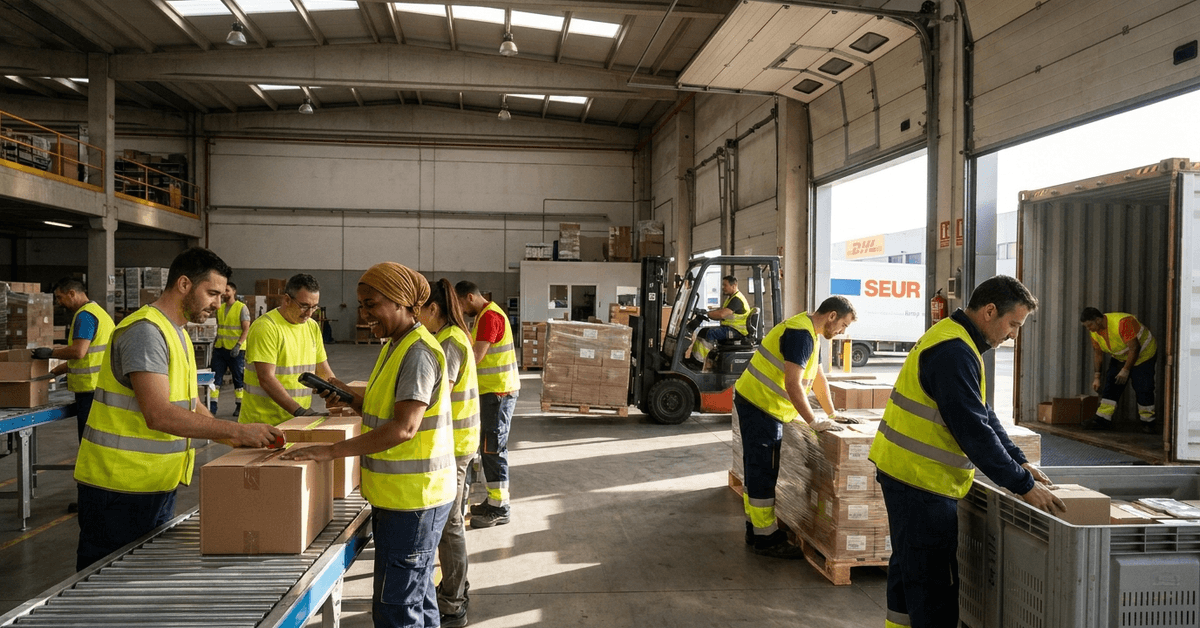
Peak Seasons Make It Urgent But the Need is Not Seasonal Anymore
Summer sales, holiday periods, and back-to-school waves do drive urgent recruitment bursts. But the deeper pull is consistent.
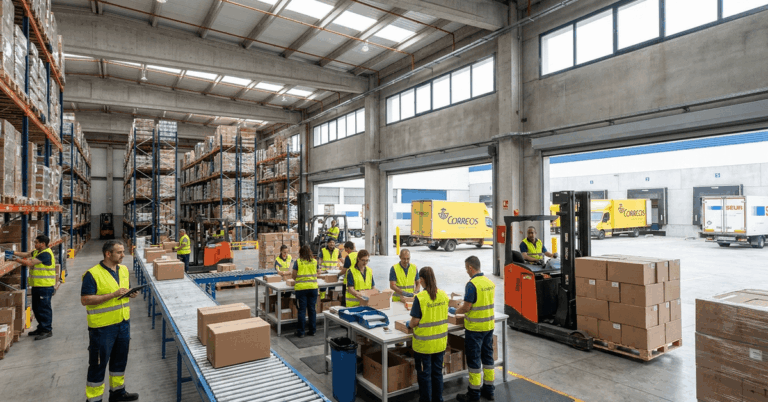
Every week that Amazon, Correos, or SEUR moves millions of packages, they need people on the floor sorting, packing, and loading. That rhythm does not pause between Black Friday and June.
Smaller cities and towns near industrial parks see this too. Logistics hubs are not exclusive to Madrid and Barcelona. Zaragoza, Guadalajara province, and areas near major motorway junctions have large distribution centers that hire continuously.
Types of Roles You Will Actually Find
Most openings fall into four categories. Each has a different physical and organizational demand, so knowing which one fits your situation saves time when applying.
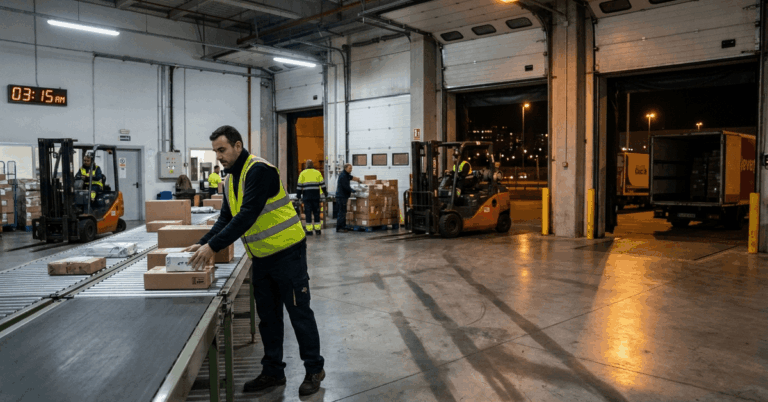
- Warehouse operator roles involve receiving merchandise, scanning inventory, and organizing products for dispatch. Expect forklifts, handheld scanners, and periods of standing or walking throughout a shift.
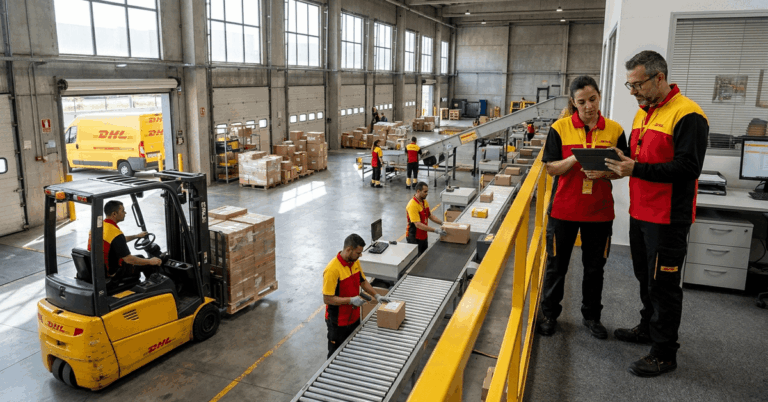
- Packing assistants sort and package orders, apply labels, and prepare shipments for pickup. Many companies list these with zero experience required. If you pay attention to detail and work at a steady pace, that is often enough to get shortlisted.
- Logistics coordinators handle tracking, transport bookings, and internal communications. Spanish fluency matters more here. Some roles also list English, especially at multinational companies.
- Loaders and unloaders move heavy freight. Physical stamina is the main requirement. Experience is rarely listed as mandatory.
What employers actually screen for
I was surprised to see how many job listings at Randstad and InfoJobs for warehouse roles put reliability above everything else.
The word “puntualidad” appears more often in these listings than any specific skill. A thin CV does not disqualify you if you can show up on time and stay the full shift.
That said, companies like El Corte Inglés and Mercadona do look for previous retail or logistics experience when hiring for larger, permanent roles. The tiered expectation is real: temp agencies have lower bars than direct hires at established brands.
Requirements Worth Knowing Before You Apply
The legal side matters more than people realize. A quick checklist of what you need:
- Right to work in Spain: EU citizenship, or a valid NIE/TIE for non-EU applicants. This is checked before contract signing.
- Basic physical fitness: most warehouse roles involve lifting or prolonged standing. No formal fitness test, but the role description will tell you the expected weights.
- Shift flexibility: evenings, weekends, and rotating schedules are standard. Applicants who limit their availability to standard office hours dramatically reduce their options.
- Basic Spanish: not always required, but it is a consistent advantage. Larger companies that operate bilingually may accept English.
- Social security enrollment: Spain’s Seguridad Social covers all registered workers. Your employer handles enrollment, but confirm it is done before your first day.
Non-EU applicants should also carry a valid NIE/TIE to every interview. Some ETT agencies (temporary employment firms) will process your contract fast, but they still need proof of work authorization.
Where to Search and How to Apply Fast
Walk-in applications at warehouses still happen, but they are rare. The fastest path to an offer runs through digital platforms.
The platforms worth checking daily:
- InfoJobs: the largest Spanish jobs portal, with thousands of industrial and logistics listings at any given time
- Indeed España: strong for real-time ads from warehouse operators and packing centers
- Randstad: specializes in temp and logistics placements, often with immediate start options
- Company career pages: Amazon Spain, SEUR, and DHL sometimes list urgent roles directly before they appear on aggregators
Apply early in the week. Recruiters at logistics companies tend to shortlist candidates within 24 to 48 hours of posting. A Tuesday morning application often gets seen before a Friday afternoon one, even if the posting went live earlier.
Some logistics companies hold jornadas de puertas abiertas: open-call hiring events where candidates can interview on the spot and tour the facility.
If the idea of submitting a CV into the void feels discouraging, these events are a faster and more direct route to a face-to-face conversation.
What your CV and cover letter should say
Keep your CV short. Two pages maximum. Lead with availability and shift flexibility. Mention any experience in retail, moving, warehouse work, or even physical labor in a different sector. Recruiters are scanning for reliability signals, not career narratives.
Cover letters for logistics roles should be two to three paragraphs at most. State your availability, mention flexibility, and name one thing that makes you easy to manage as an employee. That is the actual screening question behind every logistics hire.
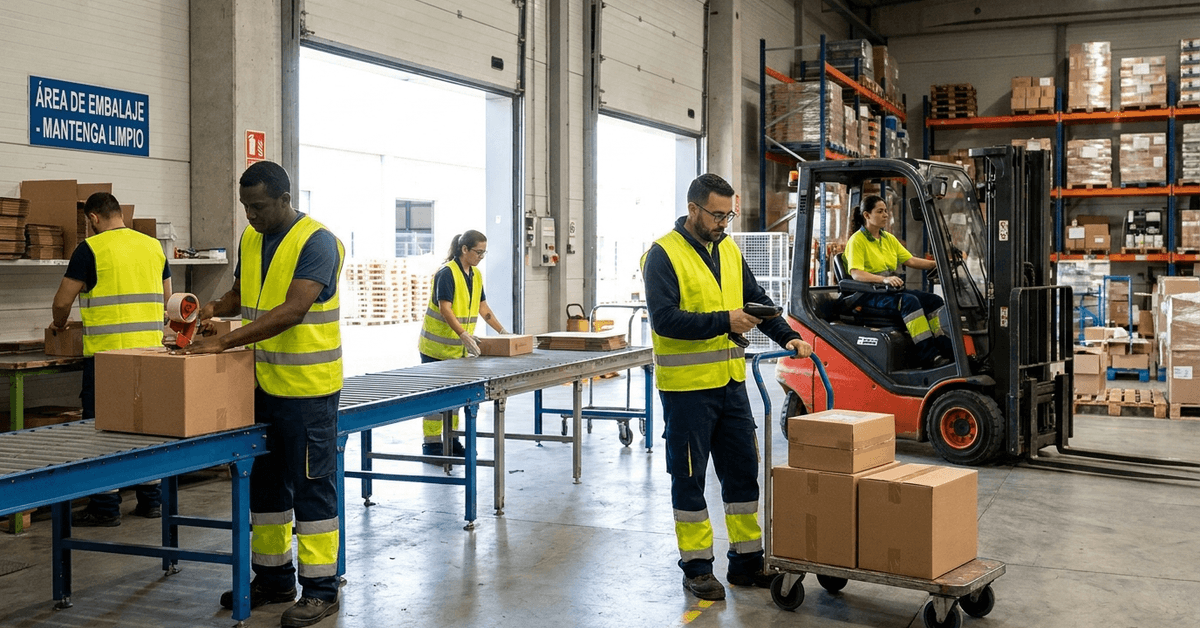
Salary Ranges and Contract Types in 2026
Pay varies by role, region, and contract type. ETT contracts often start lower than direct hires, but overtime and bonus structures can close that gap.
| Role | Monthly Salary (EUR) | Contract Type |
|---|---|---|
| Warehouse Operator | 1,100 – 1,500 | Full-time, Temp |
| Packing Assistant | 1,000 – 1,400 | Temp, Part-time |
| Logistics Coordinator | 1,350 – 1,900 | Full-time |
| Loader / Unloader | 1,100 – 1,400 | Part-time, Temp |
Night shift bonuses and attendance incentives are common in high-volume centers. An offer that looks modest at the base rate can look different after factoring in overtime and shift differentials.
Read the full contract before signing. Specifically, check whether the ETT agreement carries a bonus clause tied to hours worked per month.
My take on ETT contracts
I think the advice to “avoid temp contracts and hold out for direct hires” is wrong for most new arrivals in Spain.
An ETT contract at Randstad or Adecco placed in an Amazon warehouse gives you a Seguridad Social registration, a payslip, and a track record.
That track record is what gets you a direct contract six months later. Holding out for permanency on day one often means waiting longer with nothing.
What the Day-to-Day Actually Looks Like
Long shifts are real. Warehouse work during peak periods can mean ten-hour days with two breaks. The pace at major fulfillment centers is set by scanning targets, not personal rhythm. That adjustment takes a few weeks.
Pros of working in Spanish logistics and packing:
- Fast hiring process: offers within days, not weeks
- Immediate income with proper contract and social security
- Physical routine that keeps the day moving
- Team environment with coworkers from diverse backgrounds
- Clear path from temp to permanent if reliability is consistent
The common drawbacks are repetitive tasks, shift work that cuts into social time, and short-term contracts that create uncertainty every few months. None of these are hidden. The job descriptions are usually transparent about what to expect.
One thing I noticed that no other article seems to mention: the physical adaptation period matters more than the hiring process. Getting hired takes days. Getting your body and sleep schedule adjusted to rotating shifts takes weeks.
Candidates who drop out in the first month almost always cite schedule shock, not job difficulty. Knowing that in advance is worth more than any application tip.
For legal guidance on worker rights in Spain, the SEPE (Servicio Público de Empleo Estatal) is the official reference. For job searching, InfoJobs remains the most active platform for logistics postings in Spain.
Questions People Ask About Logistics and Packing Jobs in Spain
Q: Do I need to speak Spanish to get a packing job in Spain? Basic Spanish helps but is not a hard requirement at many warehouses run by multinational companies. Amazon Spain and DHL, for example, have multilingual floor operations. That said, safety instructions and contract paperwork are almost always in Spanish, so some reading ability is useful.
Q: Can I get a logistics job in Spain without EU citizenship? Non-EU applicants need a valid NIE and a work authorization permit before applying. ETT agencies will ask for these documents before placing you. Getting the NIE sorted before job hunting saves a lot of back-and-forth during the hiring process.
Q: Are temp contracts through ETT agencies worth it? For new workers in Spain, a temp contract still provides full Seguridad Social registration and legal protections. The main risk is contract non-renewal, which is why demonstrating reliability during the placement period matters. Many workers convert to permanent staff after one or two temp placements.
Q: What is a jornada de puertas abiertas and should I attend one? It is an open-call hiring event where a company invites candidates to interview and tour the facility on a single day. Attending one lets you skip the digital queue entirely and get a direct read on workplace culture before committing. If a logistics company near you announces one, it is worth going.
Q: How long does the hiring process usually take for warehouse jobs in Spain? Logistics roles through ETT agencies can move from application to start date in under a week. Direct hires at larger companies may take two to three weeks. Either way, this is one of the fastest-hiring sectors in Spain right now, especially during peak seasons.
Conclusion
Logistics and packing jobs in Spain are among the most accessible entry points into the formal job market right now. The pay is not spectacular at the entry level, but the hiring speed and legal protections are real advantages worth considering.
If you are new to Spain or need income without a long wait, these roles offer a concrete starting point. The door opens fast in this sector. The question is whether you are ready to walk through it.